Waves
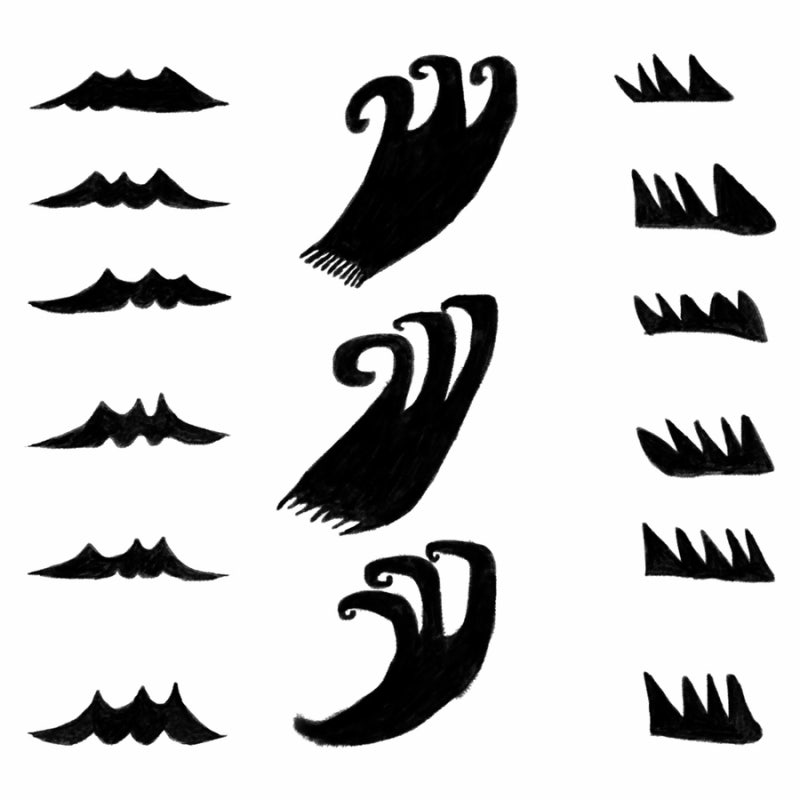
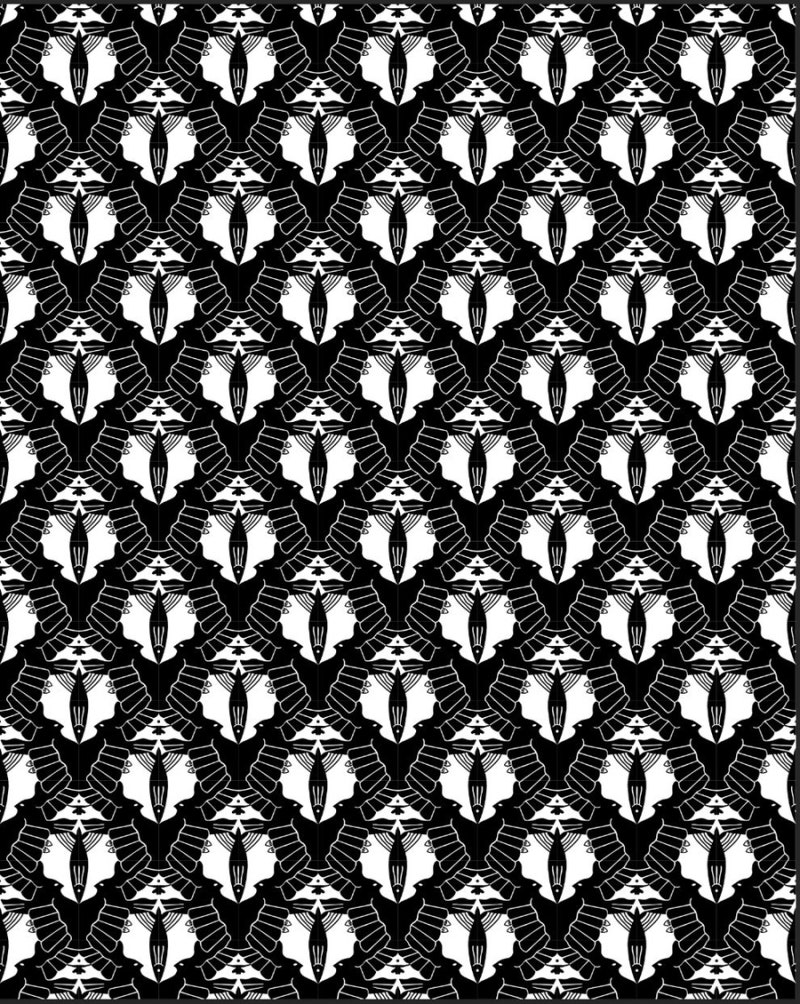
I'm obsessed with recurrences, both natural and designed: tiles, patterns, waves, and data. In my art, I like to collect images that contain variations on the whole and in tiny details, discovering new patterns and connections. Ocean waves are full of such potential. A complex and naturally occurring theme and variation, waves repeatedly rise from the ocean to create new and different movements every day. Waves are also full of data. When I lived by the water, I learned that gathering such data—understanding the shape, force, direction, and height of waves—is a way of life.I started this piece as a painting but wanted to incorporate the digital precision of data as well, so I went on a search for various mathematical theories and concepts. When I watch the ocean waves, I see geometry everywhere. In my exploration into data, I came across the Heesch tiling method and then used this to create a repeating wave motif. I also stumbled into fractal theory, an infinitely repeating pattern, of which waves are a classic example. Fractal theory is employed in vector-based editing programs, which led to the transition of my work from hand painting to digital mediums.
Fractal geometry describes chaotic transition and demonstrates the self-similarities that can be found within chaos. Fractal mathematics is one of the greatest ...When you zoom in and out of the beach area, the shape is the same if you zoom in and out. The shape stay constant. And in fractal theory, there is a coastline on the map. So if you zoom in and out, the coastline will keep the shape. Used it here - when you see the pattern of snowflake, wave shapes are also an example in fractal theory